العصب التائه
| العصب: Vagus nerve | |
|---|---|
 | |
| Plan of the upper portions of the glossopharyngeal, vagus, and accessory nerves. | |
 | |
| Course and distribution of the glossopharyngeal, vagus, and accessory nerves. | |
| Latin | nervus vagus |
| Innervates | Levator veli palatini, Salpingopharyngeus, Palatoglossus, Palatopharyngeus, Superior pharyngeal constrictor, Middle pharyngeal constrictor, Inferior pharyngeal constrictor, viscera |
| الأعصاب القحفية |
|---|
| CN 0 - الصفري |
| CN I - الشمي |
| CN II - البصري |
| CN III - المحرك للعين |
| CN IV - البَكَري |
| CN V - ثلاثي التوائم |
| CN VI - المبعِّد |
| CN VII - الوجهي |
| CN VIII - الدهليزي القوقعي |
| CN IX - البلعومي اللساني |
| CN X - المبهم |
| CN XI - اللاحق (الإضافي) |
| CN XII - تحت اللساني |
العصب التائه Vagus nerve هو عبارة عن احد الأعصاب الدماغية الأثناعشر وهو العصب الوحيد الذي ينشأ في الدماغ وينتهي بعيدا في الجهاز الهضمي ولهذا السبب يطلق على العصب تسمية العصب التائه. التسمية اللاتينية للعصب vagus تعني المتجول او المسافر.
يقوم العصب بنقل الايعازات الحسية و الحركية من الجهاز العصبي اللاودي إلى كل الأعضاء الواقعة بين رأس الأنسان إلى الجزء المستعرض من الأمعاء الغليظة ويتحكم العصب في سرعة ضربات القلب حيث ان تحفيز العصب يؤدي إلى ابطاء نبضات القلب ويتحكم العصب ايضا في حركة الأمعاء الدقيقة وجزء من الأمعاء الغليظة ويسيطر على عملية النطق من خلال احد فروعه ويسيطر على عملية التعرق ويسيطر ايضا على العضلات الأرادية الموجودة في منطقة البلعوم .
منذ عام 1997 تم استعمال زرع بطاريات صغيرة تحت الجلد تقوم بتحفيز العصب التائه لعلاج مرض الصرع و الكآبة و ارتفاع ضغط الدم ولكن هذه الطريقة العلاجية تم التصديق عليها لعلاج مرض الكآبة فقط ولاتزال جدواها في علاج الصرع و ارتفاع ضغط الدم غير مثبتة علميا.
التاريخ
أصل الاسم
الكلمة اللاتينية vagus تعني حرفياً "wandering" (the words vagrant, vagabond, vague, and divagation come from the same root). Sometimes the right and left branches together are spoken of in the plural and are thus called vagi (/ˈveɪdʒaɪ/ VAY-jy). The vagus was also historically called the pneumogastric nerve since it innervates both the lungs and the stomach.
صور اضافية
-
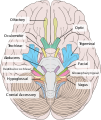 Inferior view of the human brain, with the cranial nerves labeled.
 -
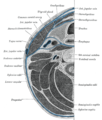 Section of the neck at about the level of the sixth cervical vertebra
 -
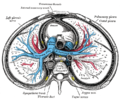 Transverse section of thorax, showing relations of pulmonary artery
 -
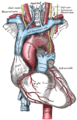 The arch of the aorta, and its branches
 -
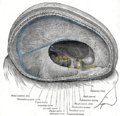 Dura mater and its processes exposed by removing part of the right half of the skull, and the brain
 -
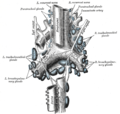 The tracheobronchial lymph glands
 -
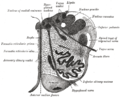 Section of the medulla oblongata at about the middle of the olive
 -
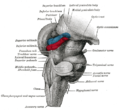 Hind- and mid-brains; postero-lateral view
 -
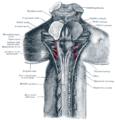 Upper part of medulla spinalis and hind- and mid-brains; posterior aspect, exposed in situ
 -
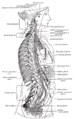 The right sympathetic chain and its connections with the thoracic, abdominal, and pelvic plexuses
 -
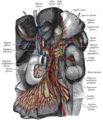 The celiac ganglia with the sympathetic plexuses of the abdominal viscera radiating from the ganglia
 -
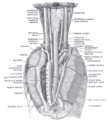 The position and relation of the esophagus in the cervical region and in the posterior mediastinum, seen from behind
 -
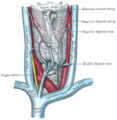 The thyroid gland and its relations
 -
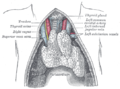 The thymus of a full-term fetus, exposed in situ
 -
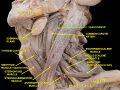 Deep dissection of vagus nerve
 -
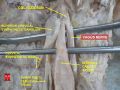 Vagus nerve – dissection


انظر أيضاً
هذا المقال يستخدم مصطلحات التشريح؛ لنظرة عامة، انظر مصطلحات التشريح.
- Porphyria – A rare disorder can cause seizures and damage to the vagal nerve.
- Vagovagal reflex
- Inflammatory reflex
- Vagus ganglion
- Vagus nerve stimulation
- Vagusstoff
الهامش
وصلات خارجية
- MedEd at Loyola grossanatomy/h_n/cn/cn1/cn10.htm
- "10-1". Cranial Nerves. Yale School of Medicine. Archived from the original on 2016-03-03.
- Human anatomy at Dartmouth figures/chapter_24/24-7.HTM
- Norman/Georgetown cranialnerves (X)
